

Theology is for everyday life: Everyday Theology (part 5)
We’ve been building toward this all week. It’s the namesake of the series, but it is also the natural outcome of what it means to know God.
Theology is simply the way we come to know God. It is receiving what he has made known about himself and learning to live in the light of it. But this knowing is not limited to information or understanding certain ideas. To know God is to know him as whole people—to love him and walk with him with our hearts, souls, minds, and bodies.
If this is what knowing God is, then theology will always find its place in ordinary life.
Theology is not reserved for classrooms or experts. It belongs in kitchens, commutes, friendships, churches, and workplaces. It meets us in the everyday moments. When we are making decisions, navigating conflict, facing suffering, raising children, going to work, or simply trying to be faithful in the small things.
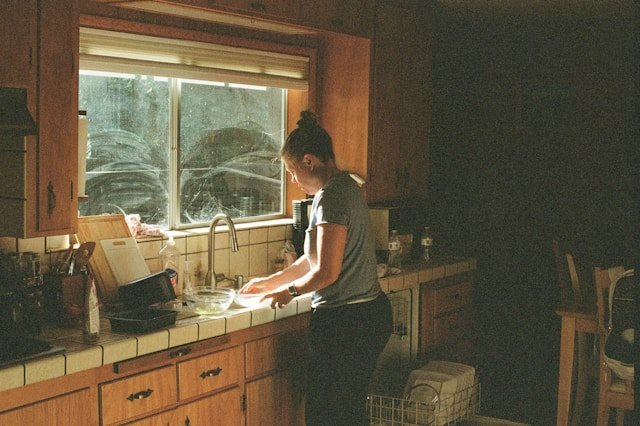
This is where everything we have seen comes together. Knowing God is not simply gathering information but responding to him with the whole of who we are. Theology is never abstract. It is the shape that this whole-person knowing takes as it is worked out in the ordinary patterns of life.
Good theology does more than give us the right ideas about God. It teaches us how to know God truly. Theology helps us to see reality rightly, to recognise who God is, who we are, and what it means to live before him. And as we come to know him in this way, that knowledge takes root not only in our thinking, but in our instincts, our practices, and our responses.
It shows up in the small moments;
In the way we speak to others when we are frustrated.
In how we respond when things don’t go to plan.
In whether we turn to God in prayer, or rely on ourselves.
In how we use our time, our attention, and our energy.
These are not separate from theology. They are our lived knowledge of God—how our knowing of him finds expression in the whole of life.
The Christian tradition consistently affirms this pattern. Simone Weil, reflecting on her experience working in factories, wrote about learning to attend to reality in the midst of ordinary labour.* The demands of repetitive, exhausting work became, for her, a training in attention—a way of learning to be present, to receive what was given, and ultimately to attend to God. Likewise, Brother Lawrence turned the daily dishes into profound communion with God.**
What Weil and Brother Lawrence both describe is not an exceptional path for a few, but a clearer picture of something true for us all: we come to know God in and through the ordinary conditions of our lives.
As Jen Wilkin puts it, everyone is a theologian.*** The question is not whether we are thinking about God, but whether we are knowing him truly. Each of us is already forming an understanding of who God is and living in response to that understanding, whether consciously or not. To live faithfully, then, is not about having everything figured out. It is about knowing God in the ordinary rhythms of life. Trusting him, turning to him, inviting him into the midst of whatever is in front of us.
And this is possible not because we are especially disciplined or insightful, but because God has already made himself known to us. By his grace, we can know him. Not exhaustively, but truly. The same God we learn about with our minds is the God who is present with us in all things, the God who is known as we walk with him.
Sometimes I find him in the deep breath I take before I do something I am feeling nervous about. Sometimes in the prick of my conscience after I have spoken harshly. I see him when I close my eyes in a moment of frustration with my children as I try not to lose my temper. I sense his embrace when I’m on my knees and pleading in prayer. I feel his warmth as my hands circle a mug of hot tea, his joy in the delight of laughter with friends. Often it is in a Bible verse that springs to my mind as I try to order my thoughts. I know his love in the tears I cry during a song or sermon at church.
We might not always know everything we want to know. Our knowledge is limited because we are finite creatures. And that is not a failure, but part of how God has made us. We do, however, know what we need to.**** God has made himself known truly and sufficiently. He has shown us who he is, who we are, and he dwells with us by his Spirit.
And so, the question is not whether we know everything, or even whether we know enough, but whether we are learning to know God. Learning to know God is not a task we complete, but a life we are invited into. It begins now and continues into eternity, as we grow in knowing the God whose fullness we will never exhaust. What a gift that this life begins today.
Theology matters, not because it is in our heads, but because it is the way we come to know God with the whole of who we are. It is not something we leave behind when we step into everyday life. It is what it looks like to know God there—where God has met us in Jesus Christ.
* Simone Weil, Waiting for God, trans. Emma Craufurd (New York: Harper & Row, 1951).
** Brother Lawrence, The Practice of the Presence of God (Springdale, PA: Whitaker House, 1982).
*** J. T. English and Jen Wilkin, You Are a Theologian: An Invitation to Know and Love God Well (Nashville: B&H Publishing Group, 2023).
**** John G. Stackhouse Jr., Need to Know: Vocation as the Heart of Christian Epistemology (Oxford: Oxford University Press, 2013)
Question for reflection:
Where do you most need to remember that knowing God touches every part of your life?
Practical Invitation:
Choose one ordinary task today—making tea, answering emails, washing dishes, driving, or tidying—and do it with deliberate awareness that God is with you. Let that small moment become a reminder that no part of life lies outside his presence or care.
Prayer:
Heavenly Father, help me to be a theologian. Help me to know you, not only in knowledge but in the way that I walk with you, as I sleep and as I wake, as I work and as I rest. Thank you that I will know you in eternity. In Jesus’ name, Amen.
Invitation:
Share your reaction or thoughts in the comments below.