

More than facts about God: Everyday Theology (part 3)
We’ve seen that human beings are not just thinking minds, but embodied, relational creatures. If that’s true, it changes what it means to know God in the first place.
Recently, a student shared with me a moment where Dr Kamina Wüst was teaching about how poetry conveys knowledge in uniquely powerful ways. After explaining the idea for a while, Dr Wüst stopped “lecturing” and instead read Billy Collins’ Introduction to Poetry, a poem that resists the impulse to interrogate a poem until it gives us its meaning.* The students had been given the information first, but encountering the poem drew them into a deeper kind of knowing.
In another College lecture that I sat in on recently (*perk of the job), we started the time with a couple of minutes of silence. With stillness. I was there for an hour and the lecturer is a wealth of knowledge on the topic of pastoral care. But honestly, those first few minutes taught me something the rest of the lecture could only describe.
I might know the words “be still and know that I am God”**, but it is something else entirely to sit in a room with others, in stillness and silence before him. Both moments reminded me that not all knowing happens by explanation. Some knowledge comes by participation, attention, and encounter.
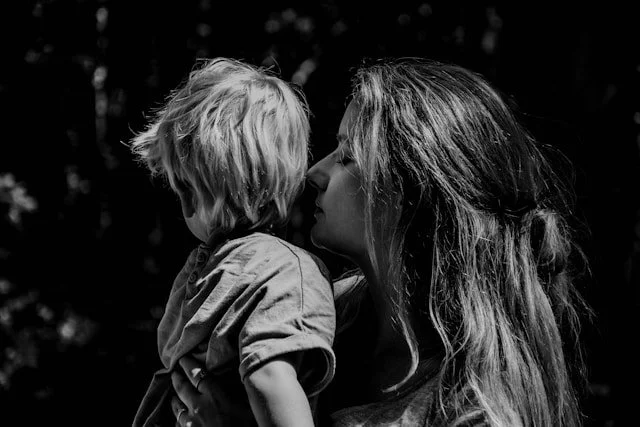
Think about the difference between knowing facts about a person and actually knowing them. You might know where someone grew up, what they like, what they believe. But real knowing grows over time—through attention, trust, and shared life. It involves not just information, but relationship. This kind of knowledge gets under our skin; it sinks into us in a way that cognitive memory and understanding can only skim the surface.
Philosophy professor and writer, Esther Lightcap Meek helps us see this more clearly with her phrase “loving to know.”*** She argues that all knowing is personal. We never approach something with detached neutrality, simply collecting facts. Instead, we come to know by committing ourselves—by trusting, attending, and responsibly engaging with what is before us. Knowing, in this sense, is not just about information we possess, but about a practised, embodied response to reality.
That has profound implications for knowing God. We do not come to know him by standing back and analysing him as an object of study, but by entrusting ourselves to him—attending to his Word, responding to his voice, and living in the light of what he has made known.
We see this in Jesus’ interactions with his disciples. Jesus has high expectations of what his disciples should know and understand, and he is also graciously accommodating and patient as they flounder. He often tells them things plainly. Yet you can’t get very far in one of the Gospels without Jesus teaching them to know him through action, story, metaphor, imagery, object lessons, even physical touch.
In Matthew 14, Jesus calls to Peter. For a moment, as Peter himself also walks on water, the disciple experiences the possibilities that arise through faith in Jesus. In John 20 we hear of doubting Thomas being invited to touch the bodily wounds of his risen Lord. Let’s not forget the night before his death when God himself got upon his knees and washed each of their feet in turn.****
How profoundly did Peter come to know Jesus through the experience of hearing the rooster crow at his third denial *****, sitting in that experience over time, and then later, after breakfast on the beach with the resurrected Jesus, being questioned three times over—do you love me?****** John records that Peter was hurt by the repetition of the question.******* I wonder how often in his life Peter heard a rooster crow, or smelled fish on the fire, and returned to those moments. Whether he felt again the knot in his stomach, the lump in his throat, and knew in his bones the truth of Jesus’ love for him.
This is where our doctrine of revelation matters. God does not simply give us information about himself; he makes himself known. In Scripture, God is not just described—he speaks, addresses, reveals, and invites us into relationship. There is much more to say here: God reveals himself in history, in flesh, we are not only those who know but those who are known by God, and the Spirit continues to bear witness in the world and in God’s people. Theology for another day! But for today, the point is this: God gives us not merely truths to master, but himself to know.
Knowing God, then, is not just head knowledge. It cannot be merely knowing a series of propositional doctrinal statements. It has to be more than that.
A careful distinction is important here. This is not about earning closeness with God. If we belong to Christ, we are already reconciled to the Father. We are in Christ, and he is in us. That relationship is secure—grounded in his finished work, not our efforts. We cannot make ourselves more loved or more accepted by God.
And yet, we are invited to live into this reality. To grow in our awareness of it. To know God, in this sense, is not about creating a relationship, but about responding to a relationship that already exists.
Knowing God is not merely having accurate ideas about him. It is lived, relational knowledge—trust, attention, love, and participation in response to the God who has first made himself known.
And if that is how we know and love God, then it raises an important question: how does this kind of knowing actually take shape in our lives?
* Billy Collins, “Introduction to Poetry,” Poetry Foundation, accessed June 12, 2026, https://www.poetryfoundation.org/poems/46712/introduction-to-poetry.
** Psalm 46:10
*** Esther Lightcap Meek, Loving to Know: Introducing Covenant Epistemology (Eugene, OR: Cascade Books, 2011),
**** John 13:1-17
***** Luke 22:61
****** John 21:15-25
******* John 21:17
Question for reflection:
What helps you move from knowing things about God to living in relationship with him?
Practical invitation:
Set aside five minutes today to sit quietly before God without trying to achieve anything.
Let the silence remind you that knowing God is not only about information, but about relationship—attention, presence, and trust.
Prayer:
Dear Father, help me to be still and know that you are God. Amen.
Invitation:
Share your reaction or thoughts in the comments below