

More than minds: Everyday Theology (part 2)
Yesterday we talked about information alone not being enough to change us, today we ask why. The answer lies in what kind of beings we are.
Recently I read Dan Brown’s novel, The Secret of Secrets. Beneath the thriller plot lies a familiar question: are human beings merely material, or is there something more to us than matter? The novel wrestles with this tension, ultimately swinging the pendulum away from materialism—positing a form of consciousness entirely dissociated from our bodies.
I found myself nodding along as co-protagonist, Dr Katherine Solomon, argues that humans are more than matter. There is a recognisable theological instinct here—Christians have long resisted reducing human life to biology alone. Yet in rejecting one error, the novel falls into another. Dr Solomon imagines the self as something detachable from the body, as though our truest identity lies beyond our embodied existence. What appears to be a tension between science and spirituality may instead reflect a deeper confusion about what it means to be human.
This confusion is not confined to fiction. Much contemporary thought is shaped by a deep dualism that separates the body from the self.* Since Descartes’ famous claim—“I think, therefore I am”—we have learned to locate the essence of the self in the mind. The body is increasingly treated as something external to personal identity and so gradually loses its significance, while the mind—or inner sense of self—becomes the place where we imagine our “real” identity resides. We are left with a false alternative: either human beings are nothing more than biological matter, or the self is imagined as something that can exist independently of the body.
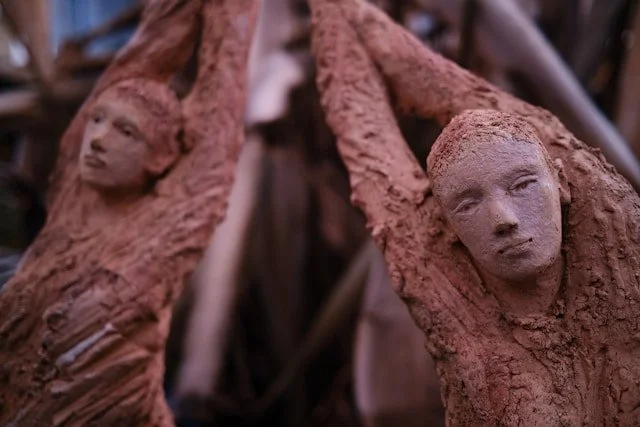
The biblical vision of humanity refuses both errors.** We are not merely biological matter, nor are we minds trapped inside bodies. We are an integrated unity of material body and immaterial soul. We are embodied souls—not minds inhabiting bodies, but persons whose bodies belong to who we are. Nor is this only a truth about creation; it is confirmed in Christ. In the incarnation, God does not rescue us from embodiment but enters into it, affirming that our embodied life is not incidental but essential.
I see something like this at home with my own children. Long before they can explain anything or reason things through, they already know me. They recognise my voice across a noisy room, reach for me when they are tired or upset, and settle more quickly when they are held. There is a kind of knowing there that is not built on ideas or explanations, but on repeated patterns of presence, trust, touch, and response.
Those familiar with attachment theory will recognise what is happening. Through everyday interactions—being held, comforted, spoken to, and cared for—children come to know their caregivers in a deeply embodied and relational way. This embodied, relational knowing shapes how a person understands themselves, others, and the world—before they can ever put it into words. Human knowing has always been more than thinking.
The implications for discipleship are significant. If we imagine ourselves primarily as thinking beings, then spiritual growth becomes little more than the acquisition of knowledge. But if we are embodied images of God, then our knowledge of God must involve the whole person—our practices, affections, relationships, and even our physical lives. We are not simply called to think about God, but to love him with all our heart, soul, mind, and strength.***
A biblical anthropology holds together what our culture splits apart, affirming both the dignity of the body and the reality that we are more than mere matter. This is why human life carries such weight. “There are no ordinary people… you have never talked to a mere mortal.”**** Lewis’s point is not that people are less physical than they appear, but that embodied life carries eternal weight.
To recover this vision is to recover both our creaturely humility and our God-given dignity. We are not gods, yet neither are we machines. We are ensouled bodies, created to glorify God and to enjoy him forever—with our whole selves. Because we are whole persons, the transformation God works in us is not merely mental. He forms us as embodied people—shaping our loves, habits, desires, and lives.
Perhaps this is why the disciples on the road to Emmaus came to recognise the risen Jesus not only as he explained the Scriptures, but as he took bread, blessed it, broke it, and gave it to them. Their eyes were opened in the middle of a meal. Sometimes God teaches us not by lifting us out of our embodied lives, but by meeting us within them.
* Nancy Pearcey, Love Thy Body: Answering Hard Questions about Life and Sexuality (Grand Rapids, MI: Baker Books, 2019).
** For a helpful framework for thinking about how Scripture often does this, see Christopher Watkin, Biblical critical theory how the Bible's unfolding story makes sense of modern life and culture (Grand Rapids, MI: Zondervan Academic, 2023).
*** Deuteronomy 6:5; Matthew 22:37
**** C. S. Lewis, “The Weight of Glory,” in The Weight of Glory and Other Addresses (New York: HarperOne, 2001)
Question: If God made us embodied souls, how might he be shaping you through your body, relationships, routines, and limits?
Practical invitation:
Pay attention today to one ordinary physical or relational moment—walking, eating, embracing someone, singing, sitting in silence, or resting. Receive it as part of your creaturely life before God. Ask yourself: What might God be teaching me through my body, my limits, my relationships, or my routines?
Prayer:
Heavenly Father, you have made me in this body. Thank you for this body, in all its particularities. Help me to love you in my heart, body, soul, mind and strength. In the name of Jesus, Amen.
Invitation:
Share a comment or reflection in the comments below.