

When knowing more isn’t enough: Everyday Theology (part 1)
We often assume that if we just learn the right things, we’ll live the right way. Yet in everyday life, we all know this isn’t quite true.
The first time I ever read the Bible up the front at church, the passage was from Romans 7. I practiced over and over to make sure I got it right, because there are a lot of ‘dos’ in that text. Often the words of the apostle Paul return to me and feel like utterances of my own: “I do not understand what I do. For what I want to do I do not do, but what I hate I do.” (Rom 7:15). Perhaps you have had the experience of ‘knowing’ something is true and yet finding that truth difficult to live out. I know I should pray, but I often avoid it. I know forgiveness matters, but resentment lingers. I know rest is a gift from God, but I keep treating it as something I don’t have time for. There is often a gap between what we know and how we live.
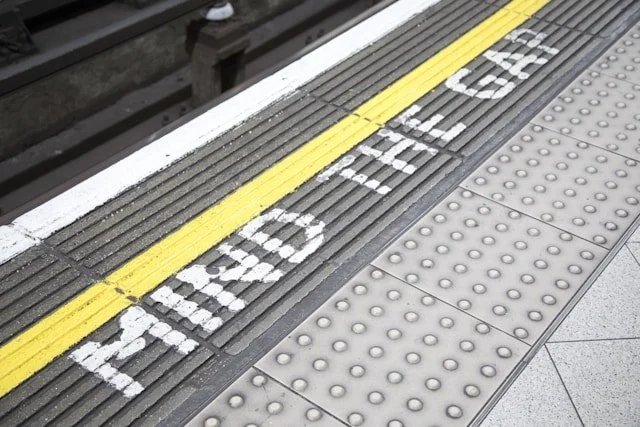
Perhaps the problem is not just what I know, but what I mean by knowing.
This gap matters because we can instinctively assume that the solution is simply thinking about it more. Maybe that is why I spend so much time seeking out information—asking friends, reading, researching, listening to podcasts, even the constant scrolling on Instagram! At my best, I turn to God’s word to seek information and to receive instruction. And this approach is embedded more broadly in society too. Often, our first collective instinct when faced with a problem is to presume that education will somehow solve it. Smoking, speeding, consent—an education campaign is our first port of call.
Now of course, information matters, deeply. If I’m taking my child to a birthday party, knowing when it is and where it is, is important information! And especially in terms of information that is right and true. When it comes to God, truth matters even more. Christians are not indifferent to right doctrine, careful reading, or faithful teaching.
More than that, Christians are people who confess that God has made himself known through his Word, and knowing him is central to all of life. This is profoundly true. But what if knowing God is not just about information?
What if we expect information to do more on its own than it actually can?
It is easy to imagine change as a straightforward sequence: first we learn the truth, then we apply it, and as a result we are changed. And look, sometimes that does work. But not always. This way of understanding Christian growth assumes too thin an account of the human person, treating us as if we were mostly minds carrying around ideas. Knowing in this sense then is simply acquiring the right information, understanding the instructions, and then putting it into practice. But if “I do not do” what I want to do, then this cannot be the whole picture.
Scripture gives us a richer understanding of human life. The biblical text repeatedly reminds us that we are not detached thinkers, but embodied, relational, spiritual, habitual creatures.* We are shaped not only by what we believe, but by what we feel, love, and imagine, what we experience and repeat, what we see, notice, and pay attention to, and the places and communities we belong to.** Our lives quietly form us long before we consciously reflect on them. Knowing God, then, cannot be reduced to merely having the right propositional statements about him stored in our minds.
I was reminded of this as I prepared for Mary Andrew College’s third Theology After Dark, tonight. If knowing God involves the whole person, then worship is one place where that becomes visible. We held an Evensong service.
While our first two Theology After Dark events centred around theological talks, we wanted to ‘practise what we preach’ with our third event and ‘do’ theology in an embodied, participatory manner. Tonight we will hold an Evensong service. It won’t be streamed because evensong isn’t really a spectator sport. Together, we will listen to God’s Word—read, preached, sung. We will speak God’s Word—together, to melody, to each other, and to him. We will kneel, we stand and sit, our eyes falling upon the darkness and the light, the high roof, the stained glassstained-glass windows, his words, and one another. And every moment will be about knowing God. We will know him not only with our minds, but with our hearts, voices, souls, and bodies.
The issue is not whether knowledge matters—it does. The issue is what kind of knowing we are talking about. Knowing God is not merely having accurate ideas about him. It’s more than that. And if that is true, then theology is not less important than we thought, but more—because it calls us not only to think rightly about God, but to be formed as whole people in relationship with him.
* Genesis 2:7; Mark 12:30; Hebrews 5:14
** See for example Proverbs 4:23; Romans 12:1-2; Philippians 4:8-9; 1 Timothy 4:7-8; 1 Corinthians 6:19-20; Colossians 3:12-17; 2 Corinthians 3:18
Question for reflection:
Where in your life do you already know what is good, but still struggle to live it?
Practical invitation:
Choose one area of your life where you already know what is good, but struggle to live it.
For the next 24 hours, simply pay attention to when that gap shows up. Don’t try to fix it immediately. Just notice it prayerfully, and ask: What does this reveal about my heart, habits, and hopes?
Prayer:
Heavenly Father, so often I do what I do not want to do, and do not do what you would have me do. Thank you that you know me, and in knowing me, you know my failings and my foolishness. And yet you still forgive me in Jesus. Help me to know you more and more. In Christ, Amen.
Invitation:
Share a comment or reflection on today in the comments below.